The Joke Thieves
An AI "comedian" with more than 375,000 followers was telling real comics' jokes, almost word for word. The platforms' rules cover a face, a name, a label and pay. None of them covers a comic's jokes.
Three weeks on Instagram
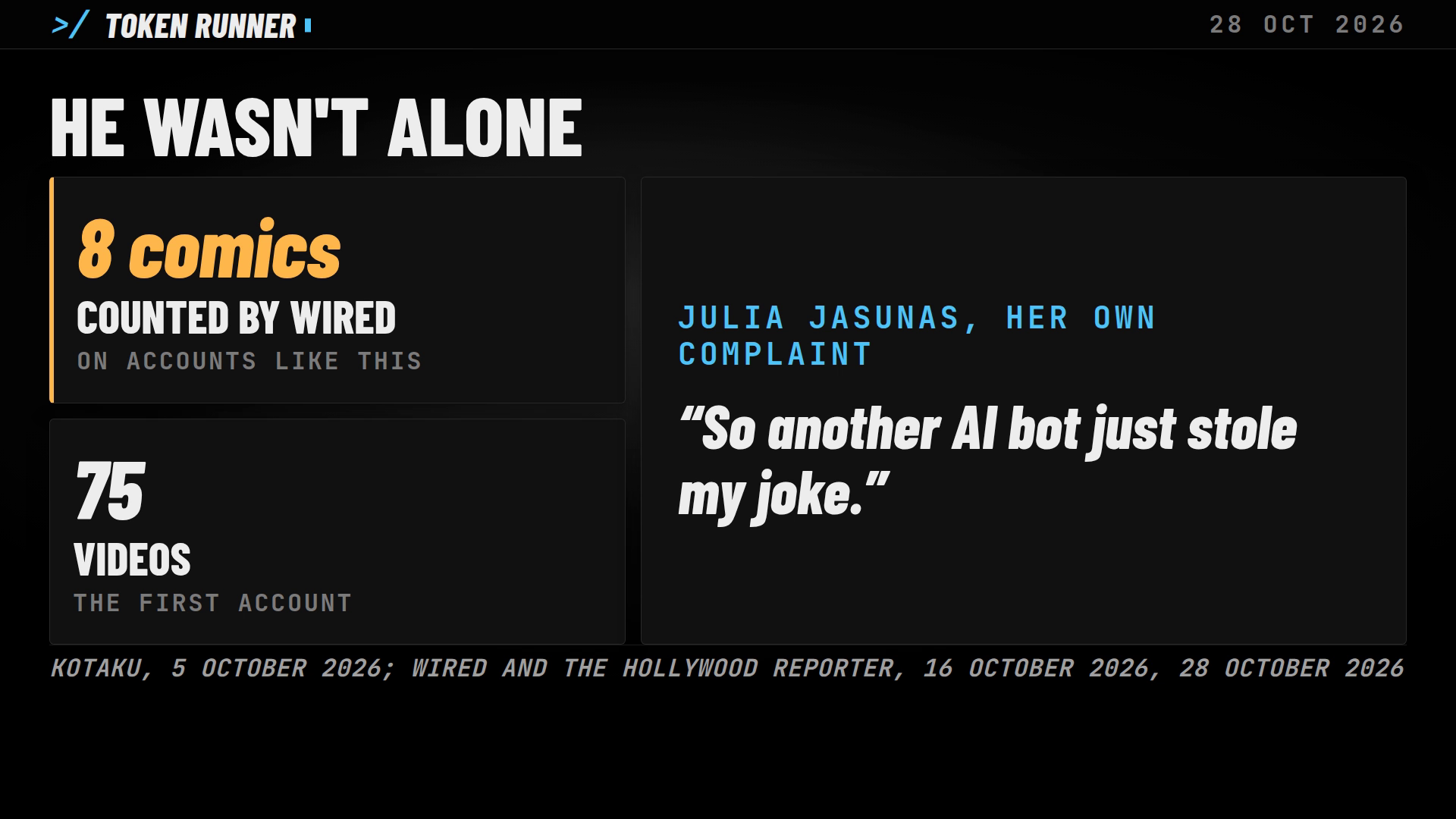
On the eleventh of September, a new comedian started posting on Instagram. Three weeks later: more than 375,000 followers, from 75 videos. One stand-up clip, over 7 million views in just under two weeks.
She isn't real. She's made with AI. Kotaku's headline put it plainly: "Viral AI-generated comedian steals jokes and is rewarded with millions of views".
Olson's set
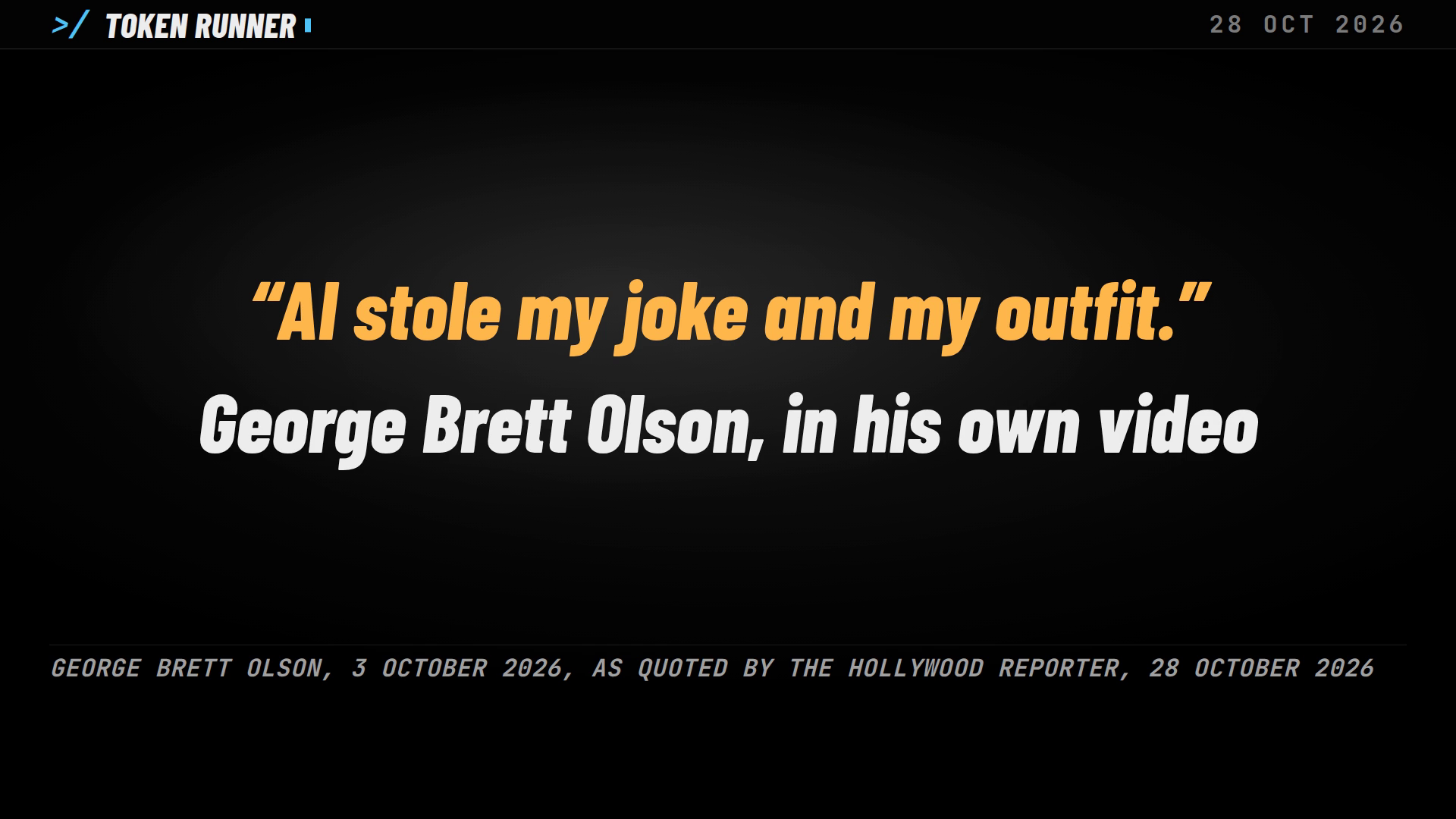
On the third of October, a comedian named George Brett Olson posted a video. On one side, his own set. On the other, the AI account, telling nearly the same joke, in nearly the same outfit.
His words: "AI stole my joke and my outfit." WIRED reports the AI version changed the punchline. The account left "sorry, won't happen again" on Olson's page, then deleted its video and many other Reels.
Eight comics
He wasn't alone. Julia Jasunas posted a similar complaint, about another AI account: "So another AI bot just stole my joke." WIRED counted eight comics whose material turned up on accounts like this.
And where do the clips lead? To a paid adult-subscription page. It isn't shown, linked or described here. The comics are named only because they went public themselves.
Meta's rule
So what do the platforms' rules say? Meta's rule bars accounts that "Impersonate another person or entity by: Using their image(s), name, or likeness with the aim to deceive others".
Your face. Your name. Not your jokes. When Jasunas reported one account for impersonation, she says Meta told her it didn't violate its rules. Meta's own line to WIRED: "Our policies are pretty clear around this stuff, and Adam's comment speaks for itself."
TikTok's label, YouTube's pay
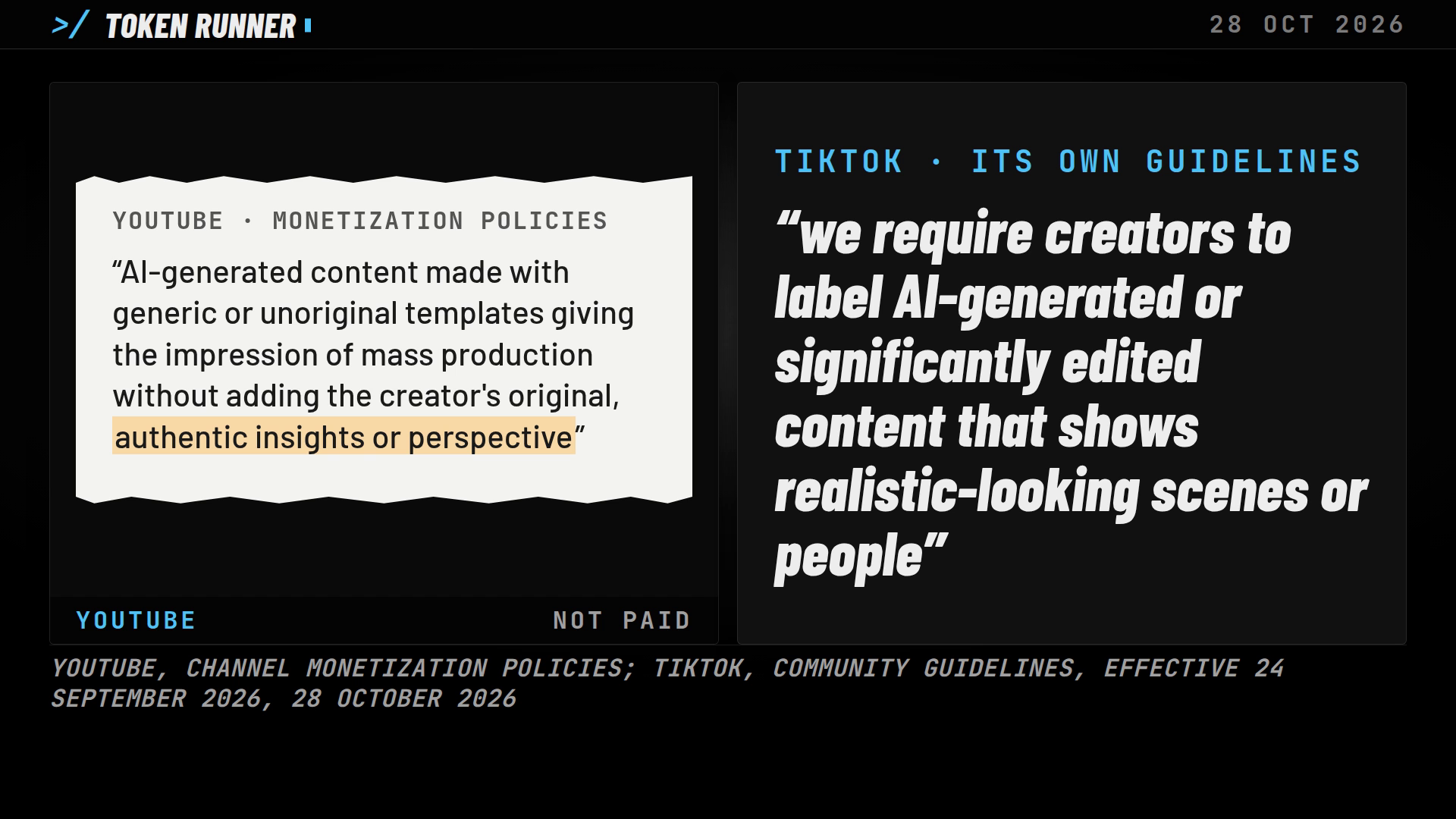
TikTok requires labels on realistic AI content: "we require creators to label AI-generated or significantly edited content that shows realistic-looking scenes or people." The rest of the rule says what happens without one: "Unlabeled content may be removed, restricted, or labeled by our team, depending on the harm it could cause." That guideline took effect on 24 September 2026, two weeks after the first account started posting.
YouTube won't pay for AI content that's mass-produced without the creator's own "authentic insights or perspective". That is a pay rule, not a removal rule. YouTube renamed it on 15 July 2025, from "repetitious content" to "inauthentic content".
A label says a clip is made with AI. A pay rule says whether it earns. Neither asks whose joke it is.
The head of Instagram
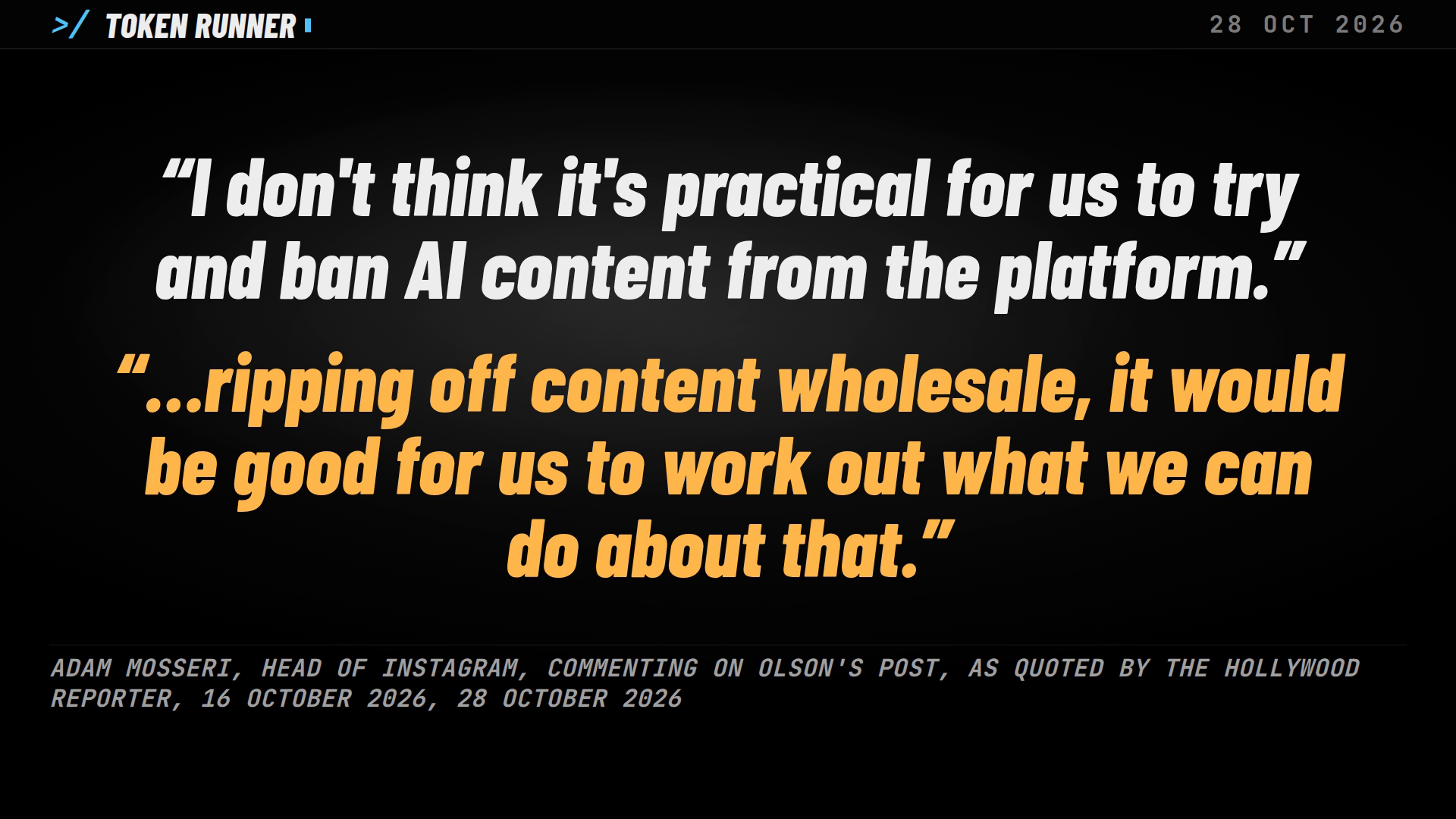
And the head of Instagram, Adam Mosseri: "I don't think it's practical for us to try and ban AI content from the platform." But, he added, if an AI creator is "ripping off content wholesale, it would be good for us to work out what we can do about that."
He wrote that as a comment under Olson's own post. Meta has made no public statement that the accounts don't breach its rules; its on-record line points back to his comment.
The copyright route
There is one route the head of Instagram named himself. On Threads he wrote: "We already let people make copyright claims against content".
It is separate from the identity and AI-labelling rules, and it is the only route confirmed at source for this piece. Other intellectual-property routes may exist; none is claimed here.
The gap
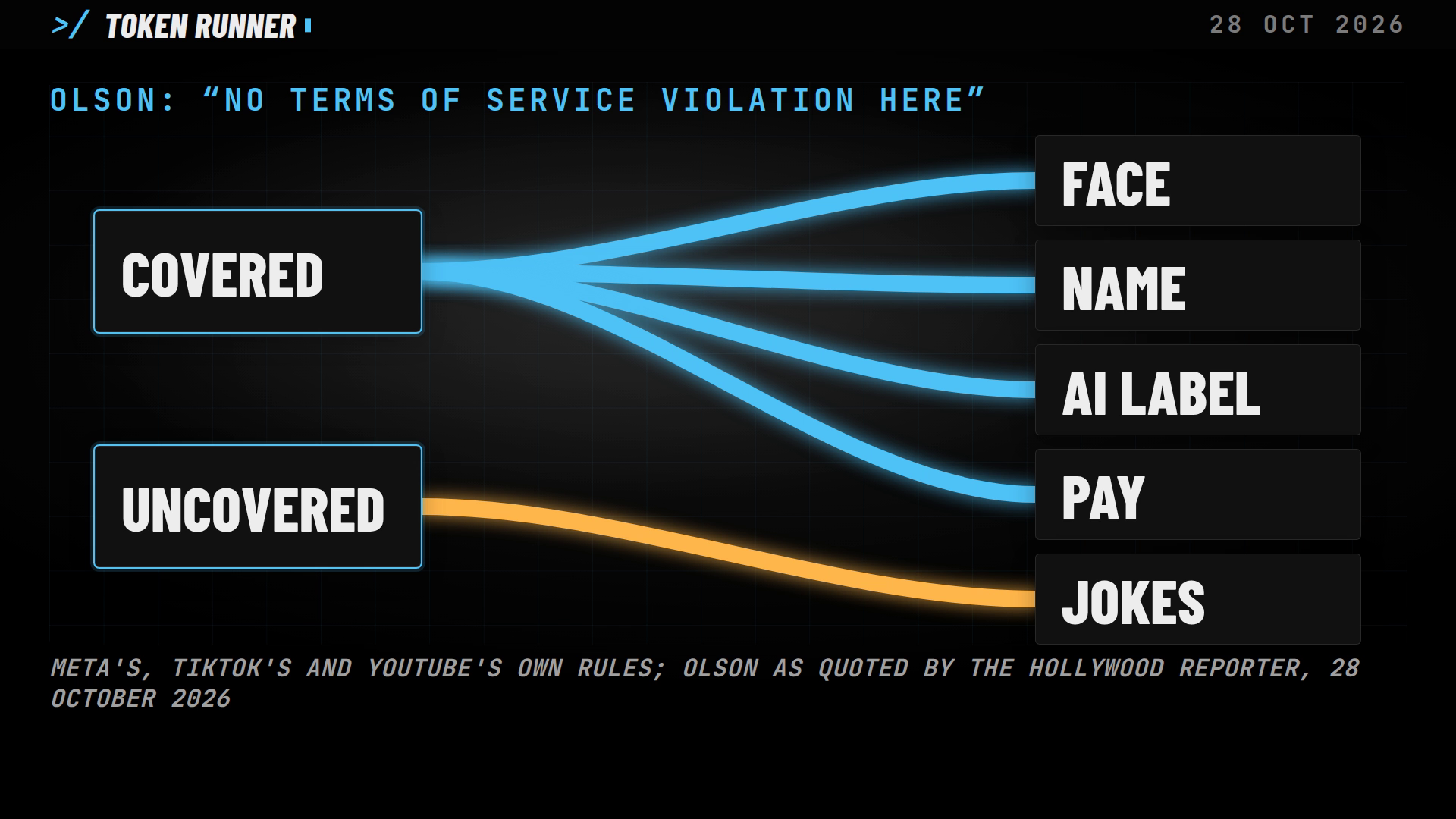
Olson put the gap in one line: "The craziest thing is that there's no terms of service violation here."
The film draws it as two columns. Covered: a face, a name, an AI label and pay. Uncovered: the jokes. A rule for your face. Not yet one for your words.
"Not yet one for your words" is this piece's own phrase, and it means only this: the identity and AI rules quoted here don't cover a person's material. Whether a joke told almost word for word is a copyright matter is a question for lawyers.
What to watch
Three things to watch. Whether Instagram does "work out what we can do", as its head put it. Whether the copyright route, the one confirmed here, works for a joke. And whether the accounts are still up: reports differ, and this piece doesn't say the first one was removed.
KompasTekno found on 7 October that all of its posts were gone while the account stayed live, with about 377,000 followers.
Every quote from the comics, the platforms' own rules, and the reporting that found them. Token Runner dot A I.
Sources
- Kotaku (Zack Zwiezen), "Viral AI-Generated Comedian Steals Jokes And Is Rewarded With Millions Of Views", 5 October 2026, read at source on 28 October 2026: "Since the account started posting on September 11, barely three weeks ago, it's already garnered over 375,000 followers"; "75 videos"; "one stand-up clip hitting over 7 million views in just under two weeks"; "On October 3, comedian George Brett Olson shared a video comparing one of Sloan's jokes to an excerpt from his own performance".
- The Hollywood Reporter, 16 October 2026: Olson, in his own video of 3 October, "AI stole my joke and my outfit." and "The craziest thing is that there's no terms of service violation here."; Julia Jasunas, on Instagram, "So another AI bot just stole my joke.", about another AI account; Adam Mosseri, in a comment on Olson's post, "I don't think it's practical for us to try and ban AI content from the platform" and, if an AI creator is "ripping off content wholesale, it would be good for us to work out what we can do about that."
- WIRED, 16 October 2026: eight comics whose material turned up on accounts of this kind; the AI version of Olson's joke changed the punchline; the account left "sorry, won't happen again" on Olson's page before deleting its video and many other Reels (no date given); Jasunas says Meta told her the account she reported for impersonation did not violate its rules; Meta's on-record line: "Our policies are pretty clear around this stuff, and Adam's comment speaks for itself."
- KompasTekno, 8 October 2026: on 7 October all of the account's posts were gone while the account stayed live, with about 377,000 followers. Reports differ on whether the account itself was removed.
- Meta, Community Standards, "Authentic Identity Representation": accounts may not "Impersonate another person or entity by: Using their image(s), name, or likeness with the aim to deceive others", read at source 28 October 2026.
- TikTok, Community Guidelines, "Integrity and Authenticity" (released 25 August 2026, effective 24 September 2026), read at source on 28 October 2026: "we require creators to label AI-generated or significantly edited content that shows realistic-looking scenes or people. Unlabeled content may be removed, restricted, or labeled by our team, depending on the harm it could cause."
- YouTube, channel monetization policies, "inauthentic content" (renamed from "repetitious content" on 15 July 2025), read at source on 28 October 2026: not eligible for monetisation, "AI-generated content made with generic or unoriginal templates giving the impression of mass production without adding the creator's original, authentic insights or perspective". A pay rule, not a removal rule.
- Adam Mosseri on Threads: "We already let people make copyright claims against content" (Instagram's copyright route, in his own words).